Introduction
The landscape of education is evolving, driven largely by innovations in technology. Among these innovations, artificial intelligence (AI) stands out as a transformative force. As educators and institutions increasingly embrace AI, we witness a fundamental shift in how learning occurs, empowering both learners and educators alike. In this article, we will explore the various ways AI is integrated into education, its potential benefits and challenges, and what the future may hold.
Understanding AI in Education
At its core, AI involves the creation of systems that can perform tasks typically requiring human intelligence, such as understanding natural language, recognizing patterns, and making decisions. In the realm of education, AI encompasses a broad array of applications, from personalized learning tools to administrative automation.
The Rise of Personalized Learning
One of the most exciting applications of AI in education is personalized learning. AI systems can analyze a student’s performance data to tailor the educational content to their specific needs. For instance, if a student struggles with certain math concepts, AI-driven platforms can adapt to provide additional resources and exercises focused on those concepts.
This approach fosters a more engaging learning environment, as students can progress at their own pace, ensuring they fully grasp each concept before moving on. A study by Educause Review found that personalized learning environments can lead to better student outcomes and higher engagement levels.
AI-Powered Tutoring Systems
AI doesn’t just adapt to student needs; it also provides additional support through AI-powered tutoring systems. These intelligent systems can offer on-demand assistance, guiding students through problem-solving processes and answering questions in real time. For example, platforms like Carnegie Learning use AI to provide personalized feedback and support in math, making it accessible anytime, anywhere.
The immediacy and availability of such resources can be particularly beneficial for students who may hesitate to ask questions in a traditional classroom setting due to fear of judgment.
Enhancing Teacher Efficiency
While much attention is given to how AI benefits students, it's equally important to recognize the advantages it offers educators. AI can streamline various administrative tasks, such as grading assignments and managing classroom logistics, allowing teachers to focus more on instruction and less on paperwork.
Automated Grading and Feedback
Consider the time-consuming task of grading essays. AI systems can now evaluate written work, providing feedback on grammar, coherence, and even the effectiveness of arguments. Tools like Turnitin’s Revision Assistant not only check for plagiarism but also offer suggestions for improvement. This technology reduces the workload for educators while providing timely feedback to students.
Data-Driven Insights
Moreover, AI can analyze trends in student performance data, providing teachers with insights that guide instruction. By identifying which areas students consistently struggle with, teachers can adapt their lesson plans to address these gaps. This data-driven approach leads to a more informed and effective teaching strategy.
Addressing Challenges and Ethical Considerations
Despite the promising prospects of AI in education, it is essential to address potential challenges associated with its implementation. One significant concern is data privacy. With AI systems collecting extensive data on student performance, ensuring that this information is protected and used ethically is crucial.
Equity in Access
Additionally, there is a risk of exacerbating existing inequalities. Not every student has equal access to technology or the internet, which may lead to disparities in educational outcomes. Educational institutions must be proactive in ensuring equitable access to AI tools and resources, fostering an inclusive learning environment for all.
Bias in AI Algorithms
Another pressing issue is the potential for bias in AI algorithms. If an AI system is trained on a dataset that lacks diversity, it may inadvertently perpetuate stereotypes or miss the unique needs of certain student populations. It is vital for developers to prioritize fairness and inclusivity in AI design.
The Future of AI in Education
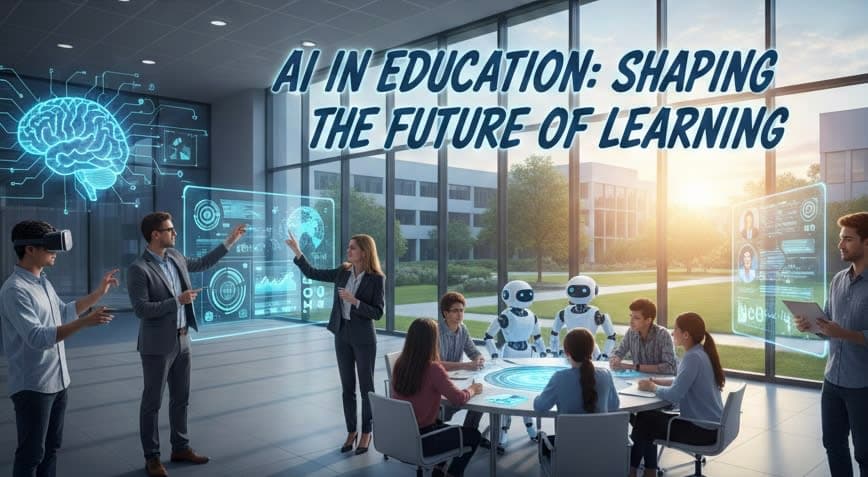
Looking ahead, the role of AI in education is poised to expand further. As technology continues to develop, we can expect more sophisticated systems that enhance the learning experience. Moreover, the integration of AI can lead to collaborative learning environments where students and educators work together with AI tools to solve complex problems.
Imagine virtual classrooms powered by AI that simulate real-world scenarios, allowing students to apply their knowledge in practical settings. Such innovations could revolutionize how we approach education, making learning more dynamic and relevant.
Conclusion
AI in education presents a unique opportunity to enhance learning experiences, streamline administrative processes, and support educators. By embracing these advancements while addressing ethical concerns and working towards equitable access, we can harness the full potential of AI to create a brighter future for learners everywhere. As we look forward to what lies ahead, one thing is clear: the intersection of AI and education is a space ripe for innovation and transformation.
FAQs
-
What is AI in education?
AI in education refers to the use of artificial intelligence technologies to enhance learning, personalize education, and automate administrative tasks within educational institutions.
-
How does AI personalize learning?
AI personalizes learning by analyzing individual student data to adapt educational content to meet specific needs, helping students progress at their own pace.
-
What are the benefits of AI for teachers?
AI helps teachers by automating grading and administrative tasks, providing insights into student performance, and offering tools to enhance instructional strategies.
-
Are there ethical concerns with using AI in education?
Yes, ethical concerns include data privacy, equity in access to technology, and potential bias in AI algorithms, which must be addressed to ensure fair and responsible use.
-
What is the future of AI in education?
The future of AI in education includes advancements such as virtual classrooms, collaborative learning environments, and more sophisticated systems that enhance student engagement.
-
How can schools implement AI effectively?
Schools can implement AI effectively by investing in technology, training educators, ensuring equitable access, and prioritizing ethical considerations in AI development.