Introduction
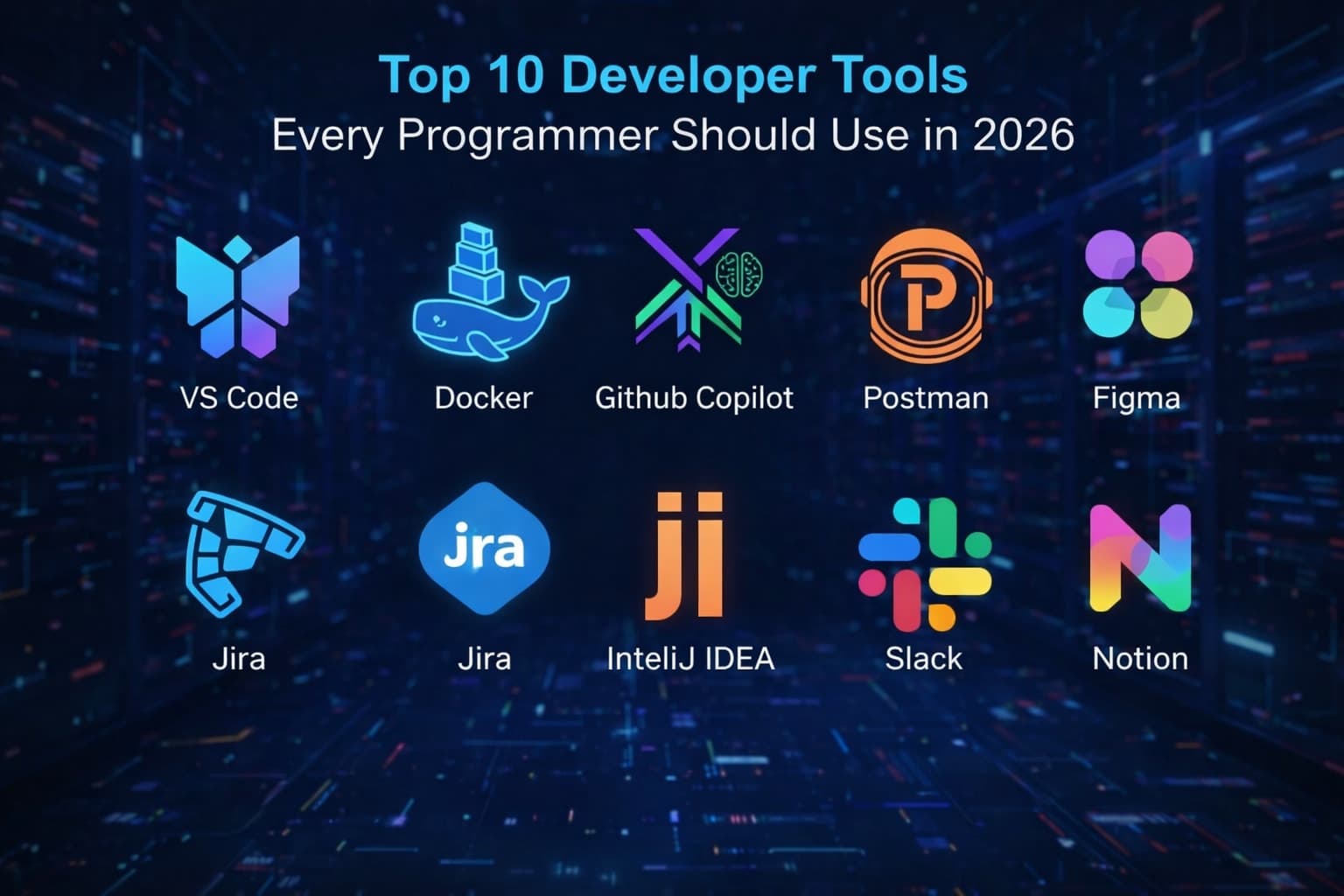
As the landscape of programming continues to evolve, so do the tools that developers rely on to build their applications. In 2026, new technologies and methodologies are emerging, and it’s crucial for programmers to keep their toolkit updated. Whether you’re a seasoned developer or just starting out, having the right tools can significantly enhance your productivity and streamline your coding processes. This article will explore the top 10 developer tools that every programmer should consider using this year.
1. Visual Studio Code
Visual Studio Code, or VS Code, has remained a top choice for developers due to its flexibility and a plethora of extensions. In 2026, it continues to evolve with new features that cater to various programming languages. Its integration with Git allows for seamless version control, while built-in debugging tools help programmers troubleshoot their code effectively. The customizable interface lets developers tailor their environment to fit their unique workflows.
2. Docker
Containerization has become a revolutionary concept in software development. Docker simplifies the process of managing application dependencies, ensuring that software runs uniformly across different environments. In 2026, Docker remains essential for developers focusing on DevOps practices, as it streamlines deployment and scaling. By using Docker, programmers can create, manage, and share containers effectively, thus reducing compatibility issues.
3. GitHub Copilot
In an age where artificial intelligence is becoming increasingly integrated into development practices, GitHub Copilot stands out as a powerful coding assistant. Launched in early 2021, this AI-powered tool generates code suggestions directly within your editor based on context. By 2026, it has matured, providing even more accurate and relevant recommendations. This tool can speed up coding significantly, allowing programmers to focus on higher-level design and architecture.
4. Postman
For API testing, Postman remains an indispensable tool for developers in 2026. The platform offers a user-friendly interface to build and test APIs efficiently. It allows programmers to send requests, inspect responses, and even automate tests, thus ensuring that APIs are functioning as intended. With the growing reliance on microservices architecture, having a robust tool like Postman is essential for maintaining application functionality.
5. Figma
While primarily a design tool, Figma has become increasingly relevant for developers, especially those involved in front-end development. In 2026, the collaborative features of Figma enable teams to work together in real time, bridging the gap between design and development. Developers can directly access design specifications and assets, streamlining the implementation process and reducing back-and-forth communication delays.
6. Jira
Effective project management is crucial for any development team. Jira provides a comprehensive platform for tracking tasks, bugs, and features. In 2026, it’s an essential tool for Agile project management, allowing teams to plan sprints, prioritize tasks, and collaborate efficiently. With its powerful reporting features, Jira helps teams analyze their performance and improve processes continuously.
7. Slack
Communication is key in development projects, and Slack remains a top choice for team collaboration. By 2026, Slack has integrated with numerous development tools, making it easier for teams to stay connected and informed. Channels, direct messaging, and integrations with tools like GitHub and Jira enable seamless communication, ensuring that all team members are on the same page.
8. IntelliJ IDEA
For Java developers, IntelliJ IDEA is a powerful integrated development environment (IDE) that continues to gain traction in 2026. Known for its intelligent code completion, refactoring tools, and integrated version control, IntelliJ IDEA enhances productivity and reduces the potential for errors. Its plugin ecosystem allows developers to customize their workflows, making it a versatile choice for many development needs.
9. Notion
Notion has gained popularity as a versatile productivity tool, blending note-taking, documentation, and project management. By 2026, it has cemented its place in developer toolkits, thanks to its ability to create wikis, track tasks, and manage documentation in one place. With its collaborative features, Notion helps teams stay organized and ensures that important information is easily accessible.
10. Cloudflare
As web performance and security become even more critical, Cloudflare offers essential services for developers. In 2026, it provides tools for improving website speed, securing applications against DDoS attacks, and managing DNS. By leveraging Cloudflare, developers can enhance the reliability and performance of their projects, ensuring a better experience for end-users.
Conclusion
As technology continues to advance, staying updated with the latest tools is crucial for any developer. The tools mentioned above not only enhance productivity but also adapt to the evolving nature of software development. Investing time in learning and mastering these tools can prepare programmers for the challenges they will face in 2026 and beyond. Embrace the tech of tomorrow, and equip yourself with the right tools to excel in your programming journey!